Tuesday, February 16, 2016

Fort Croghan

"Lone Star Historian 2" is a blog about the travels and activities of the State Historian of Texas during his second year. Bill O'Neal was appointed to a two-year term by Gov. Rick Perry on August 22, 2012, at an impressive ceremony in the State Capitol. Bill is headquartered at Panola College (www.panola.edu) in Carthage, where he has taught since 1970. For more than 20 years Bill conducted the state's first Traveling Texas History class, a three-hour credit course which featured a 2,100-mile itinerary. In 2000 he was awarded a Piper Professorship, and in 2012 he received the Lifetime Achievement Award from the Wild West Historical Association. Bill has published over 40 books, almost half about Texas history subjects, and in 2007 he was named Best Living Non-Fiction Writer by True West Magazine. In 2013 he was awarded an honorary Doctor of Letters degree by his alma mater, Texas A&M University - Commerce. 


With Carole Goble and "Jesse,"
the uniformed Dragoon
I spent a week in January traveling throughout southwest Texas, as far as the Davis Mountains, and along the Rio Grande, from Del Rio to Eagle Pass and from Laredo to Brownsville. The purpose of this trip was to gather photographs for an Arcadia Press book, Frontier Forts of West Texas.
1852 ballot box was used for decades.

The first fort I visited was Fort Croghan in Burnet. An early outpost on the Texas frontier, Fort Croghan was established in 1849 on 1,600 leased acres just west of Hamilton Creek and including Post Mountain. A sentry hut was erected atop Post Mountain, and lookouts kept a watch for war parties. With soldiers providing manual labor, other buildings were built, including officers’ quarters (four dog-trot cabins), several small structures for enlisted men, officers, and a hospital. Within four years, however, the Texas frontier moved far enough westward for a new line of forts to be built. Most of the original line of outposts were abandoned, including Fort Croghan, decommissioned in 1853. A village, modern-day Burnet, had grown up east of Hamilton Creek. When the military moved out, citizens from the community and from the country side visited Fort Croghan for “midnight requisitioning.” Doors, windows, shingles, timber – even entire buildings – were hauled away for civilian use.
Blacksmith shop with Noah Smithwick tools.

In the 1960s the Burnet County Heritage Society began to collect pioneer buildings from the area, arranging them on the site of the old post. The collection includes the sentry hut from Post Mountain and the former adjutant’s office. Citizens donated artifacts large and small, including a great many pieces of farm equipment. Venerable farm machinery is displayed throughout the grounds, and many other items are displayed in the Fort Croghan Museum, housed in a modern building at the entrance to the old parade ground.
Post Mountain sentinel hut.
For years I stopped by the old fort for a quick look with Panola College students I was taking to the Davis Mountains and Big Bend. But it had been quite a number of years since I had stopped to see Fort Croghan, and now I needed photos and fresh information. Except for “Christmas at Old Fort Croghan,” a living history event held the second Saturday night each December, the fort is closed most of the winter. But I phoned the museum and connected with curator Ann Nelson. I identified myself and explained the nature of my proposed visit, hopefully just after lunch on Friday, January 22. Ann graciously assured me that someone would be on hand to show me the museum and grounds.
My guide, Milli Williams.

One-room school interior.
When I arrived a delegation was present to welcome the State Historian to Fort Croghan Museum. I was privileged to meet several key members of the local historical community. Ann Nelson introduced me around, and it was a special pleasure to meet Carole Goble, whose family came to Burnet County in the 1870s. Carole is the author of the Arcadia book, Burnet, a 2009 publication, and she long served as director of the Fort Croghan Museum. I told her of my Burnet County family connections and of my admiration for her book, and she showed me treasures of the museum.

Dog-trot cabin.
It was a frigid day, but I was conducted around the grounds by Milli Williams. A member of the DRT, Milli attended a public address that I delivered in nearby Lampasas and that was sponsored by the DRT. Despite the cold temperature, Milli took me from building to building, sharing with me a stream of information about the museum she serves as director.

My visit to Fort Croghan was fruitful and most enjoyable. Any fan of military or agricultural history will find Fort Croghan Museum well worth a visit.

For more information: www.fortcroghan.org
Memorial to soldiers who died at Fort Croghan.

Pioneer cabin.

Community well.

Post headquarters.

Stagecoach Inn interior.

Part of the vintage farm equipment display.

Tuesday, February 9, 2016

TSHA and ICE

"Lone Star Historian 2" is a blog about the travels and activities of the State Historian of Texas during his second year. Bill O'Neal was appointed to a two-year term by Gov. Rick Perry on August 22, 2012, at an impressive ceremony in the State Capitol. Bill is headquartered at Panola College (www.panola.edu) in Carthage, where he has taught since 1970. For more than 20 years Bill conducted the state's first Traveling Texas History class, a three-hour credit course which featured a 2,100-mile itinerary. In 2000 he was awarded a Piper Professorship, and in 2012 he received the Lifetime Achievement Award from the Wild West Historical Association. Bill has published over 40 books, almost half about Texas history subjects, and in 2007 he was named Best Living Non-Fiction Writer by True West Magazine. In 2013 he was awarded an honorary Doctor of Letters degree by his alma mater, Texas A&M University - Commerce. 


During the first week of February I had the pleasure of presenting Texas historical programs to two diverse groups. On the first day of February I was in Richardson to participate in a two-day event for Texas history teachers, mostly fourth- and seventh-grade instructors. The event was sponsored and arranged by the Texas State Historical Association, with the cooperation of the Region 10 Education Center in Richardson. The sessions were put together by Charles Nugent, TSHA Adult Program Manager. Charles spent 17 years as a public school teacher before joining the TSHA staff. With his long background in the public schools, Charles has a special feel for the instructional needs of teachers, and he has demonstrated an excellent touch at organizing events for Texas history teachers which stress content over methodology. Charles lined up numerous presenters, experts in various fields of Texana who would offer rich information for attendees to take back to their classrooms. In addition, participants would be credited with two days of professional development (the requirement for professional development has been increased from three days per school year to seven days).
Vendors room

I was asked to lead off the conference with a program on a favorite subject of mine, “Musical Traditions of Texas.” I opened with my conviction that Texas has the richest and most colorful history and culture of any state, emphasizing that a program on Texas music would combine important elements of both history and culture. Music, like any art, is a reflection of life, and since schoolkids like music – granted, their music – it is relatively easy to interest them in musical heritage. Of course, Texas has produced a parade of talented musicians in every genre: Scott Joplin, King of Ragtime; Jack Teagarden, King of the Jazz Trombone; Broadway star Mary Martin; classical pianist Van Cliburn; pop star Jessica Simpson; Hispanic musicians Selena and Johnny Rodriguez.
With Charles Nugent

But for all of the gifted Texas artists in various genres, Texans have dominated Country and Western Music. Marion T. Slaughter of Jefferson – popularly known as Vernon Dalhart – was the first artist to record popular C&W, and to record a million-seller (Wreck of the Old `97” – country people loved train songs). Ernest Tubb of Ellis County became a fixture at Nashville’s Grand Ole Opry. Fiddler Bob Wills created Western Swing. Two of the top three Singing Cowboys – Gene Autry and Tex Ritter – were Texans, and the third – Ohioan Roy Rogers – was married to Texan Dale Evans. Willie Nelson is a Texas icon. George Strait has released his 60th Number One C&W hit. And with the aid of a PowerPoint I quickly indicated more than a score of other C&W stars from Texas.
By the time I began the opening address at
Region 10, 115 teachers had gathered.

The TSHA conference took place on Monday and Tuesday, February 1 and 2. On Saturday I was in Nacogdoches for a luncheon address to a regional meeting of ICE. Not an acronym, ICE indicates the Packaged Ice Industry. Indeed, I picked up a copy of ICE World Journal, the international publication of the Packaged Ice Industry. The regional meeting in Nacogdoches was open to industry members from New Mexico, Oklahoma, Arkansas, Louisiana, and Texas.


Meeting room of  ICE
A former student of mine, Connie Browning Dorsett, felt that this predominantly male crowd would enjoy the change of pace that my program on Texas Gunslingers would offer. I was delighted at the opportunity to provide a dose of Texas history to any group, and I brought a bag of vintage weapons and gun rigs. For 45 minutes I presented the point that Texas was the “Gunfighter Capital of the Old West.” The audience enjoyed the program, eagerly examined my history toys, and bought a great many inscribed books. We ate a catered lunch together, and I had a grand time with a new group of history friends.
With James and Connie Browning Dorsett

Tuesday, February 2, 2016

Buffalo Soldiers

"Lone Star Historian 2" is a blog about the travels and activities of the State Historian of Texas during his second year. Bill O'Neal was appointed to a two-year term by Gov. Rick Perry on August 22, 2012, at an impressive ceremony in the State Capitol. Bill is headquartered at Panola College (www.panola.edu) in Carthage, where he has taught since 1970. For more than 20 years Bill conducted the state's first Traveling Texas History class, a three-hour credit course which featured a 2,100-mile itinerary. In 2000 he was awarded a Piper Professorship, and in 2012 he received the Lifetime Achievement Award from the Wild West Historical Association. Bill has published over 40 books, almost half about Texas history subjects, and in 2007 he was named Best Living Non-Fiction Writer by True West Magazine. In 2013 he was awarded an honorary Doctor of Letters degree by his alma mater, Texas A&M University - Commerce. 


Tenth Cavalry company in dress uniforms on
Fort Davis parade grounds.
Lt. Henry O. Flipper in 1877 became
the first African-American to
graduate from West Point. Assigned to
the Tenth Cavalry, Flipper served in
Texas at Forts Concho, Elliott, and Davis.
It was easy to select a blog topic for Black History Month. During the past few weeks I’ve made two long tours through Central and West and South Texas to photograph frontier forts for a book for Arcadia Publishers, Frontier Forts of West Texas, to be published in the fall of 2016. One trip of a few days covered a little more than 1,000 miles, while the second journey, to far West Texas and along the Rio Grande, extended for nearly 2,000 miles. At most of these nineteenth century posts, as proclaimed in exhibits and brochures, frontier “Buffalo Soldiers” served with faithfulness and pride.

Col. Edward Hatch commanded the
Ninth Cavalry from 1866-1889.
Col. Benjamin Grierson commanded
the Tenth Cavalry from 1866-1890.
Grierson was a music teacher prior
to the Civil War. He created a
regimental band by procuring
instruments and training his musicians.
During the Civil War black regiments, led by white officers, fought with notable skill and courage. The army was reduced and reorganized after the war. Ten cavalry regiments were retained, and the Ninth and Tenth were black units. In addition, there were four black infantry regiments, the Thirty-eighth through the Forty-first. But in 1869 there were further reductions, and while all ten cavalry regiments were maintained, sixteen infantry regiments were eliminated. The remaining two black units became the Twenty-fourth and Twenty-fifth Infantry Regiments.

Company barracks at Fort Concho. There were serious
racial tensions between the citizens of nearby
San Angelo and the Buffalo Soldiers.
All four black regiments saw service in Texas. About six companies would establish regimental headquarters at a large base such as Fort Concho, Fort Griffin, Fort Richardson, or Fort Davis, while the other six troops would be deployed to smaller outposts. For all frontier soldiers, white as well as black, daily activities usually were mundane: construction or maintenance of post buildings, stringing miles of telegraph wire, while enduring Spartan living conditions and harsh discipline. Troopers also guarded mail coaches and wagon trains and surveying crews, and cavalry patrols rode in pursuit of mounted war parties. 

Barracks interior at Fort McKavett.
Throughout the West during the post-Civil War Indian campaigns, the majority of fighting against horseback warriors was done by cavalrymen. Colonels of the Ninth and Tenth Cavalry Regiments were Edward Hatch and Benjamin Grierson. Colonels Hatch and Grierson were able combat leaders, and their men were courageous and resolute in battle. Indeed, thirteen black troopers were awarded the Medal of Honor for valor in Texas. The tightly curled hair of the black soldiers reminded Plains Indians of the hair on the head of buffalo. Bison was the staff of life of Plains Indians, and as a gesture of respect they called the black troopers “Buffalo Soldiers.”


Exhibit at the Buffalo Soldiers
National Museum in Houston.
Enlisted men earned from $13 monthly for privates to $22 for sergeants, in addition to meals, housing, and uniforms. This was better than most black men could do in the Old South after the Civil War, and the quality of enlistees was high. The quality of white recruits was much lower, because opportunities for white civilian were far greater, and the desertion rate was quite high. But the desertion rate among Buffalo Soldier regiments was the lowest in the army. Reliable, loyal, and courageous, Buffalo Soldiers established an admirable record on the frontier of Texas.

Wednesday, January 27, 2016

From the PCDF to the SCV

"Lone Star Historian 2" is a blog about the travels and activities of the State Historian of Texas during his second year. Bill O'Neal was appointed to a two-year term by Gov. Rick Perry on August 22, 2012, at an impressive ceremony in the State Capitol. Bill is headquartered at Panola College (www.panola.edu) in Carthage, where he has taught since 1970. For more than 20 years Bill conducted the state's first Traveling Texas History class, a three-hour credit course which featured a 2,100-mile itinerary. In 2000 he was awarded a Piper Professorship, and in 2012 he received the Lifetime Achievement Award from the Wild West Historical Association. Bill has published over 40 books, almost half about Texas history subjects, and in 2007 he was named Best Living Non-Fiction Writer by True West Magazine. In 2013 he was awarded an honorary Doctor of Letters degree by his alma mater, Texas A&M University - Commerce. 


With Tommie Ritter Smith
During the third week in January I delivered programs to two East Texas groups in three days. At noon on Tuesday, January 19, I attended the annual luncheon meeting of the Panola Development Foundation at the Texas Country Music Hall of Fame in Carthage. I had been invited to provide an address about Carthage by Tommie Ritter Smith, President of the Panola County Chamber of Commerce. Other guests included spouses of Foundation members. We enjoyed a catered steak meal, and PCDF President Jerry Hanszen conducted a brief business session before giving me a most gracious introduction.

In my remarks I emphasized notable men and women who were natives of Carthage and Panola County, while stressing that our community always has been in the mainstream of Texas economic activities. The Texas “Economic Trinity,” in chronological order, has focused upon cotton, cattle, and oil. From its founding in the 1840s, Carthage was a cotton town, and for several decades the economy of Panola County was based on cotton farming. As the Panola County cotton lands wore out in the 20th century, West Texans had begun to engage heavily in irrigated cotton farming. Simultaneously, East Texas farmers began to shift from cotton to cattle raising and Panola County farmers participated in this trend. During this time Panola County became one of about 210 Texas counties to produce oil, although Panola County petroleum production was modest. But during the 1940s the largest natural gas field in the United States was developed in Panola County. Large gas refineries were constructed on the outskirts of Carthage or only a few miles outside town. Carthage enjoyed population growth and remarkable community development, trends which occurred again during the 1970s when TUGCO (Texas Utilities Generating Company) began a large coal mining operation, bringing 100s of good-paying jobs to the county.

Intro by Jerry Hanzsen


Carthage also is the home of the Texas Country Music Hall of Fame. Panola County is the only county in the nation with two native sons – Tex Ritter and Jim Reeves - who are members of Nashville’s Country Music Hall of Fame. During the 1990s Tommie Ritter Smith pulled family strings, obtaining a treasure trove of Tex Ritter memorabilia and artifacts, and developing the Tex Ritter Museum. By 1998 The Texas Country Music Hall of Fame opened in Carthage, the most appropriate community in the state, and our annual Hall of Fame induction is a major event in the world of Country and Western Music. 
Statue of Tex Ritter and White Flash outside the Hall of Fame


Johnnie and Norma Holley
Top Chapter Award
Two days later I drove to Tyler to provide a program for the Captain James P. Douglas Camp of the Division of the Sons of Confederate Veterans. I have been privileged to meet with the Tyler SCV Camp annually for years, and it was a pleasure to greet a number of friends. I was invited by Johnnie Lee Holley, who recently completed his tenure as Commander of the Texas Division, which boasts 80 camps, or chapters. Johnnie’s vivacious wife Norma also was present, and she recently was the statewide Director of the Texas Society of the Order of Confederate Rose. A number of other women helped comprise a large crowd at Sweet Sue’s Family Restaurant in Tyler. I was introduced by Camp Commander Dennis Brand, and my topic was the 1864 Battle of Adobe Walls, when a force of 400 Union soldiers and Native American scouts from New Mexico battled 2,000 Comanche and Kiowa warriors. Col. Kit Carson, utilizing his vast combat experience – and two mountain howitzers – successfully fought a far superior force. It was the largest military combat against Native Americans during the Civil War, and the engagement took place in Texas.


The Tyler camp always has been exceptionally active, and during the meeting it was announced that the Captain James P. Douglas Camp had been selected as the best SCV camp in the nation. Congratulations to the enthusiastic and dedicated members of the nation’s top SCV organization.
With Camp Commander Dennis Brand

Monday, January 18, 2016

The Start of 2016

"Lone Star Historian 2" is a blog about the travels and activities of the State Historian of Texas during his second year. Bill O'Neal was appointed to a two-year term by Gov. Rick Perry on August 22, 2012, at an impressive ceremony in the State Capitol. Bill is headquartered at Panola College (www.panola.edu) in Carthage, where he has taught since 1970. For more than 20 years Bill conducted the state's first Traveling Texas History class, a three-hour credit course which featured a 2,100-mile itinerary. In 2000 he was awarded a Piper Professorship, and in 2012 he received the Lifetime Achievement Award from the Wild West Historical Association. Bill has published over 40 books, almost half about Texas history subjects, and in 2007 he was named Best Living Non-Fiction Writer by True West Magazine. In 2013 he was awarded an honorary Doctor of Letters degree by his alma mater, Texas A&M University - Commerce. 


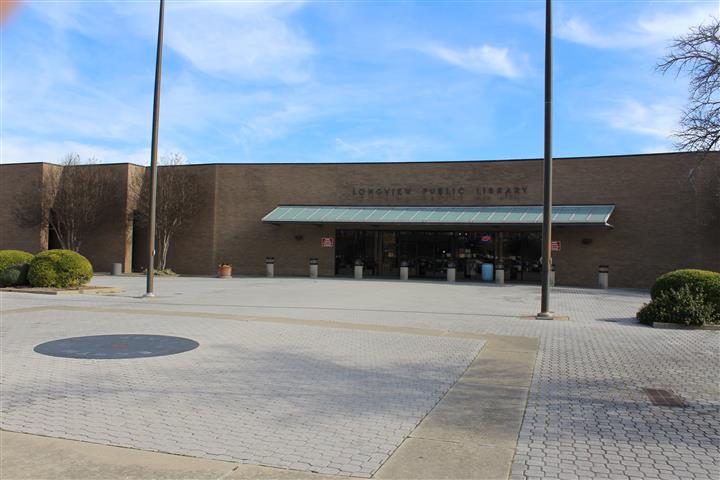
Longview Public Library
My first two activities in 2016 as State Historian occurred early in January. On Tuesday, January 5, I drove to Longview for a 1:30 meeting with the local DAR chapter. A few months ago I provided a program on Margaret Houston to a Longview garden club (Margaret was an avid gardener). One of the members, Freida Frost, is president of the DAR chapter, and she asked me to present the same program to the DAR ladies. Since Sam Houston’s father was a combat officer during the American Revolution, and since Sam became a key figure in the Texas Revolution, the program seemed appropriate for a DAR group.


With Freida Frost
The DAR convened in the large meeting room of the Longview Public Library. The DAR ladies arranged refreshments, and several gentlemen joined the crowd. I participated in the customary DAR opening ceremonies, then I had the pleasure of addressing a receptive audience.
With Margaret Houston


With Ralph and Cliff Todd. Cliff is presenting
me an Oil Patch Bible.
I enjoyed a similar pleasure a few days ago in Tyler. I was asked to deliver a luncheon address to the Oilfield Christian Fellowship, a band of Christian men and women who are employed in the oil industry. This Fellowship meets monthly at Tyler’s Hollytree Country Club, and the membership includes Ralph and Cliff Todd of Carthage. The Todd twins were history students in my classes at Panola College more than 40 years ago. Since that acquaintance it has been my privilege to enjoy their friendship. We belong to the same church, Central Baptist, where Ralph and Cliff are deacons. Several weeks ago I was asked to deliver a lay sermon during an evening service at Central Baptist. I am neither a theologian nor a preacher, so I prepared an address tracing the religious roots of the founding of America. It is my conviction as an historian that we do not know who we are until we know who we were, and I attempted to describe the deep religious background of Americans.

After hearing my remarks, Cliff Todd told me about the Oilfield Christian Fellowship. It was my honor to address such a group, and there was an excellent attendance, including several former students of mine at Panola College. I was impressed with the men and women I talked to before lunch, and I enjoyed the company of those at my table. The principal activity prior to my program was to announce those in the industry who had been laid off since the last meeting, and to anticipate their needs. It was a poignant moment, particularly since many of those at the meeting might soon face the same disruption in their careers.


I was introduced by John Trosclair, president of the Tyler group. It had been revealed to me that the customary program for Oilfield Christian Fellowship meetings is the Christian testimony of the speaker, which made my program on the Christian roots of early America somewhat out of the ordinary, but quite suitable for this audience. Afterward, in fact, several men requested copies of my speech.

I was presented a copy of the New Living Translation Bible: God’s Word for the Oil Field Patch, Fuel for the Soul. I also picked up a glossy, four-page description of “The Oilfield Christian Fellowship: Past, Present, and Future.” In 1991 two Houston oilmen, John Bird and Jim Teague, hosted a breakfast in order to get to know other workers in the oil industry. Immediately it was decided to stage a monthly luncheon at Houston’s First Baptist Church, where as many as 150 men and women attend. There were over 50 in attendance at Tyler, and other Texas chapters are centered in Dallas, Fort Worth, Midland, The Woodlands, San Antonio, and Corpus Christi. There are chapters in other states, Canada, and three universities: University of Houston, LSU, and University of Tulsa. The mission statement of the Oilfield Christian Fellowship is: “To share the good news about Jesus Christ at each function, giving men and women in the oil industry the occasion to accept Christ as their personal Savior and to encourage everyone in their walk with our Lord.” In 2003 the OCF began to print and place God’s Word for the Oil Patch Bibles around drilling rigs, and more than 250,000 copies have been distributed internationally. The OCF has funded oilfield chapels and has certified “Oil Patch Chaplains.” Building on the camaraderie of oil industry workers, the oilfield ministry is based on Proverbs 27:17, “As iron sharpens iron, so one man sharpens another.” The OCF is a remarkable movement, and one of which I was unaware until this week.
Chapter President John Trosclair
For more information: OilfieldChristianFellowship.com